The Silk Road Table
A Culinary Story of Spices and Recipes Across Ancient Trade Routes
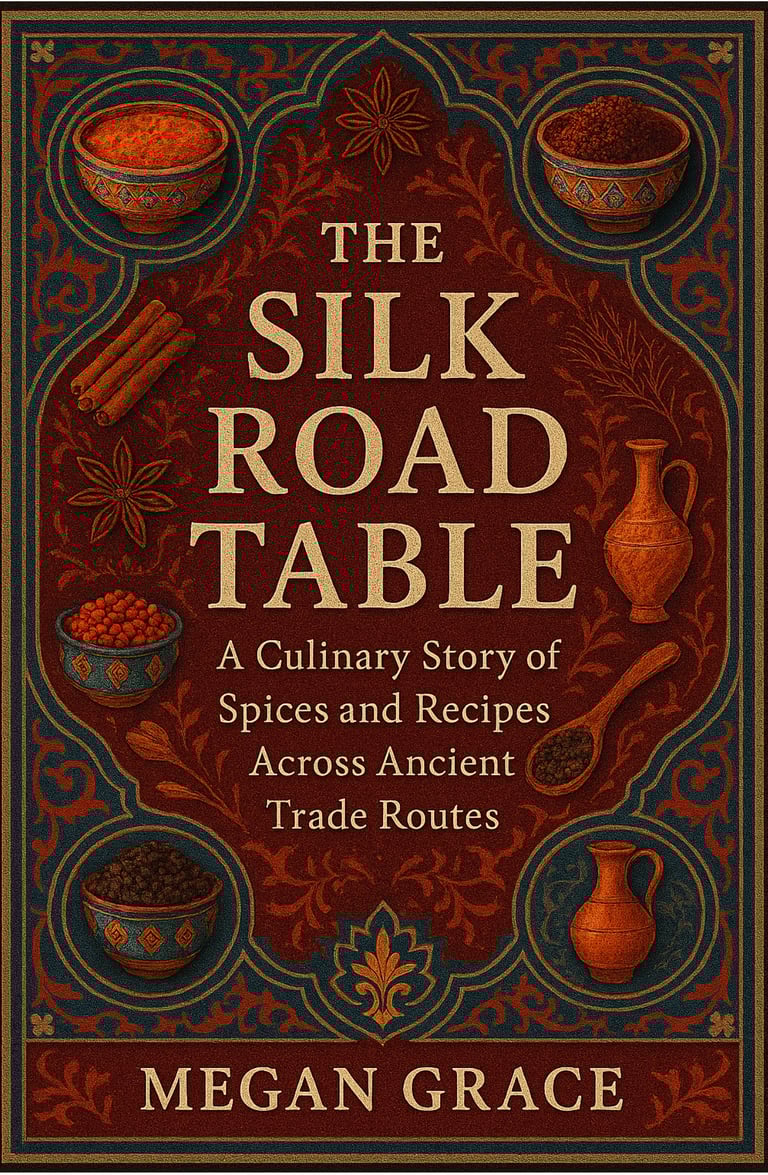
A culinary odyssey across centuries, cultures, and kitchens
Silk Road Table blends historical fiction, sensory storytelling, and recipe-driven narrative to explore how food traveled, transformed, and united people across the ancient Silk Road—and how its legacy continues in modern kitchens.
---
🕌 Chapter 1 — Spice Winds Rising
The story opens on the edge of the Taklamakan Desert, where a seasoned merchant teaches his young apprentice the value of memory, flavor, and the preciousness of spices like saffron and black pepper. Through vivid scenes of early trade, readers see how the Silk Road began as a shifting network of paths shaped by danger, necessity, and curiosity.
A recipe for Nomad’s Mutton and Barley Stew anchors the chapter, symbolizing sustenance, resilience, and the earliest culinary exchanges.
---
🐪 Chapter 2 — Caravans and Crossroads
In bustling Kashgar, Farideh and Imran witness the chaotic beauty of a multicultural market where cooks from Persia, China, Sogdia, and the steppes trade techniques and ingredients.
A Persian cook demonstrates how innovation emerges from scarcity and improvisation, culminating in the creation of Market Caravan Flatbread with Airag and Apricots.
Themes of collaboration, risk, and the fragile nature of culinary knowledge deepen as a sandstorm forces the cooks to protect their shared fire—an image of recipes surviving through community.
---
🏺 Chapter 3 — Feast of Empires
At a grand diplomatic banquet, Imran and Farideh prepare dishes that merge traditions: Chinese noodles with Persian herbs, lamb stews sweetened with apricots, Uyghur flatbreads, and saffron rice with candied walnuts.
Tensions rise as rival cooks question each other’s methods, and political negotiations simmer beneath the feast.
The banquet succeeds, proving that food can bridge empires even when politics falter.
This chapter emphasizes improvisation, cultural blending, and the power of shared meals to create temporary peace.
---
🌍 Chapter 4 — Echoes of Flavor
Now in Bukhara, Farideh reflects on how recipes continue to travel even when people stay rooted. Letters, memories, and ingredients carry stories across borders.
A young apprentice, Timur, learns that tradition is fluid—each family and region adds its own “echo” to dishes like pilaf.
The chapter’s recipe, Silk Road Pilaf—A Living Tradition, reinforces the idea that culinary heritage survives through adaptation, not preservation alone.
---
🔥 Chapter 5 — Beyond the Horizon
In a modern culinary competition, Timur—now a chef—reimagines Silk Road flavors for a global audience. His dish blends Persian lamb, Levantine pomegranate, Mongol dairy traditions, and Syrian freekeh.
Judges praise the dish not as a relic but as a conversation between past and present.
The chapter closes with a reflection on the Silk Road’s true legacy: a spirit of curiosity, exchange, and courage that lives on in every kitchen where cooks dare to blend and reinvent.
© 2025. All rights reserved.